

Let’s be real for a second, if the term Reactive Narcissism has been randomly popping up all over your TikTok FYP or YouTube feed lately, trust me, that’s probably not a coincidence.
Logically speaking, algorithms are literally designed to push the kind of content you’ve been subconsciously searching for or emotionally sitting with, especially when it starts brushing up against things like relationships, boundaries, and that quiet kind of emotional burnout you don’t always know how to name yet.
At its core, this isn’t some dramatic villain origin story about a good person suddenly getting possessed and turning into a full-blown emotional psychopath.
It’s way closer to a classic tale of someone who’s been treated like an emotional landfill for way too long, constantly absorbing other people’s chaos, until one day they hit their limit, burn out, and decide to wrap their entire life in barbed wire just to finally feel safe again.
Picture Daisy.
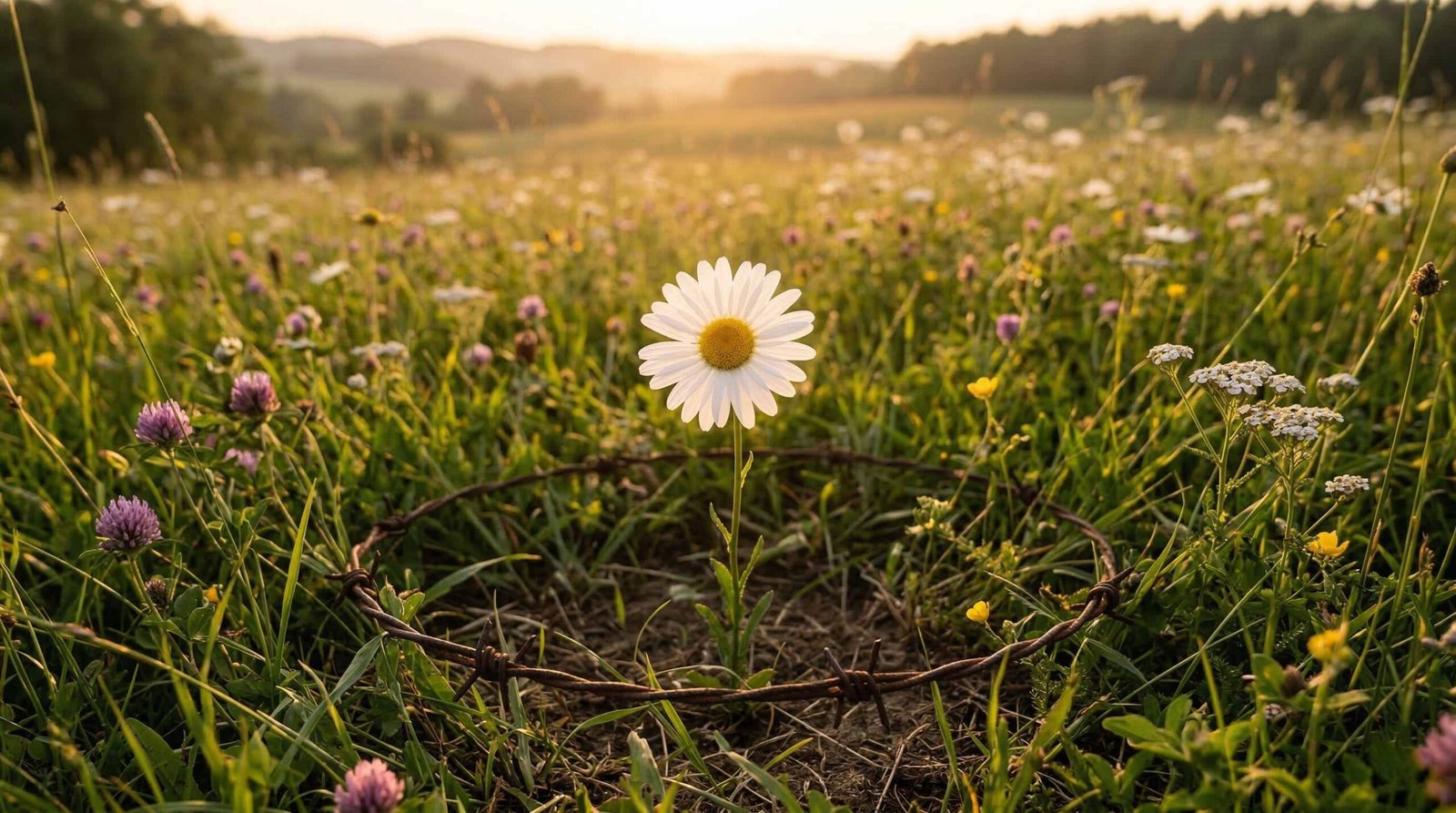
A small flower, quietly blooming in an open field.
No need for attention, no dramatic energy, just existing with a kind of calm that feels oddly safe.
People pass by, notice Daisy, and instantly feel a little more at ease.
No one feels threatened getting close, there’s zero sense of danger.
Daisy has always been a walking safe space without even trying.
And yeah, that’s pretty much the fate of highly empathetic people.
They somehow end up as everyone’s emotional call center, the go-to place for dumping unresolved feelings, the temporary shelter when someone else’s life is falling apart.
The truth is, Daisy never set out to become anything toxic.
She just wanted to be a safe place for people to land.
There’s just one problem: the world has this almost natural talent for draining people who are a little too kind for their own survival.
When Empathy Turns Into Emotional Burnout

A lot of people think having high empathy is somehow aesthetic.
Like being able to understand everyone’s feelings automatically means your life will be peaceful and put together.
Yeah… preach all you want.
Reality hits different.
Empathy without boundaries is basically unpaid emotional labor, a full-time mental grind where you’re constantly showing up for everyone else.
And the wild part? You don’t even get paid for it.
At first, it all feels manageable. A friend shows up crying over a toxic relationship. Daisy listens. No big deal.
The next day, someone else comes in carrying years of family trauma. Daisy’s there again.
A few days later, another person spirals into a full-on quarter-life crisis. And just like that, Daisy becomes the emotional support pillar all over again.
Everything feels normal… until one day, Daisy starts noticing something’s off in this whole “matrix.”
Every rant, every emotional mess somehow finds its way to her.
Other people’s feelings get a free pass to crash into her life, over and over again.
But the moment Daisy needs someone to show up with the same level of care?
Crickets.
Dead silence.
She’s always been there, ears wide open for everyone else, but somehow, almost no one ever sticks around long enough to truly listen to her.
When the “Nice One” Suddenly Looks Narcissistic
And right at this lowest point, the script starts getting rewritten.
One day, Daisy does something that’s actually very simple, but used to feel almost impossible for her.
After being everyone’s emotional dumping ground for way too long, she finally hits emotional burnout.
From that moment on, something shifts.
Daisy starts saying “no.”
She stops replying to five-paragraph drama texts at 2 a.m., quietly retires from being the unpaid conflict mediator, and no longer forces her shoulders to carry the emotional weight of an entire village.
For Daisy, setting those boundaries felt like taking her first real breath after years of drowning.
Finally… air.
But for her circle?
Oh, this was a scandal.
The girl who used to be available 24/7 suddenly felt cold. Distant. Almost unrecognizable. The same person who once understood everyone now started getting labeled as selfish. Harsh. “Not the same anymore.”
In their eyes, Daisy didn’t heal.
She changed—and not in a way they liked.🔥
And of course, society is always quick with the labels.
“Oh, you’ve changed.”
“Why are you so distant now?”
“Wow… you’re getting kinda narcissistic, don’t you think?”
But here’s the thing.
Nothing “evil” is actually happening.
Daisy just finally has boundaries.
That’s it.
But to the people who were used to having unlimited access to her energy?
Those boundaries don’t feel like self-respect.
They feel like a personal attack.
Not because Daisy suddenly turned into a bad person,
but because their free trial of her empathy just expired.🔥
Reactive Narcissism as a Survival Mode
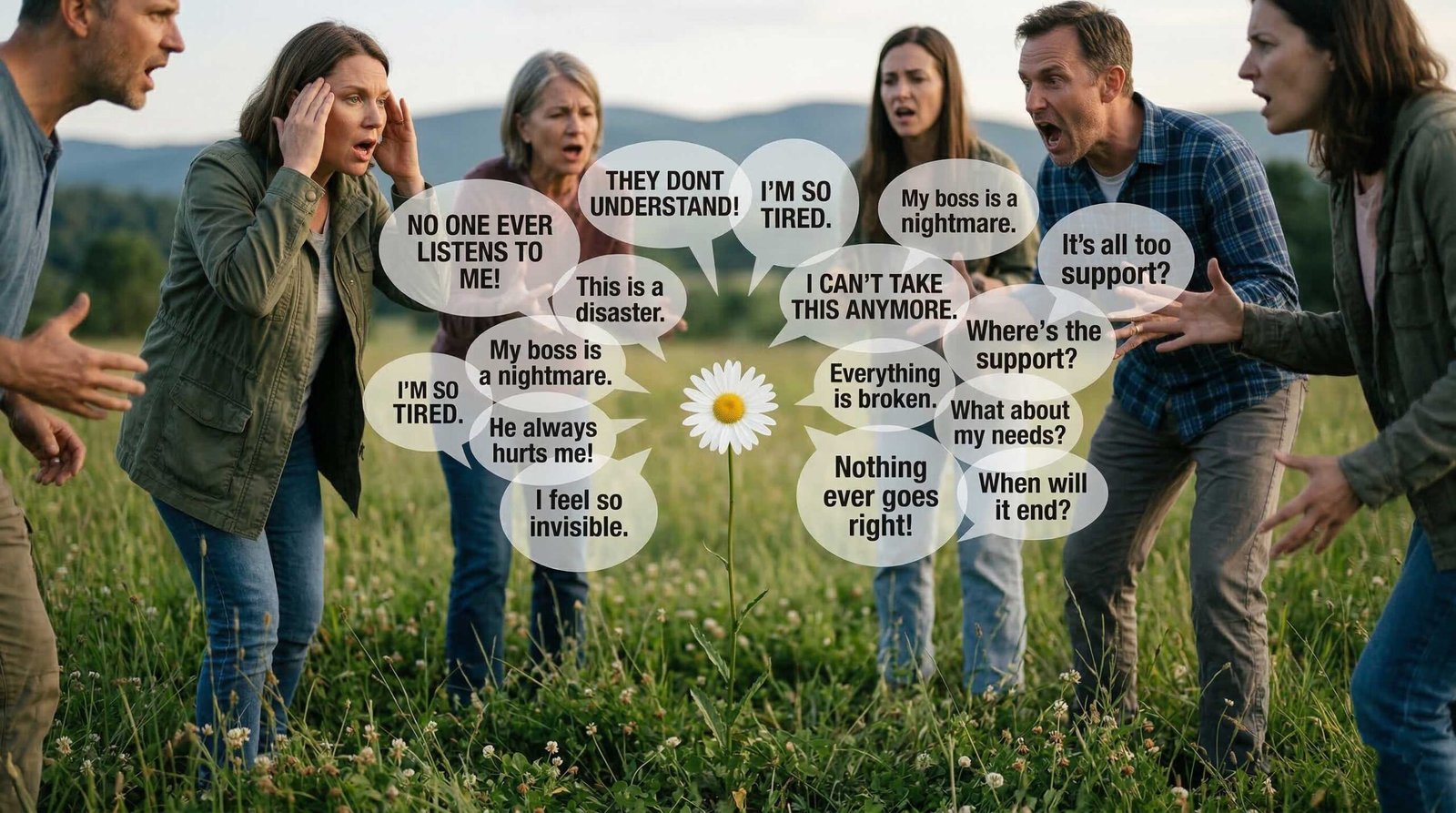
In psychology, this whole mind-bending shift is explained through a concept called Reactive Narcissism.
And let’s be clear, this is NOT the same as actual narcissism like Narcissistic Personality Disorder.
Reactive Narcissism is purely a survival mode, a defensive response your mind builds when it’s been pushed too far.
When your mental space has been repeatedly drained in exhausting relationships, your brain eventually learns a hard truth:
being too open can feel straight-up dangerous to your own well-being.
So your brain does what it’s designed to do.
It switches into the most human protocol there is: putting you first.
From the outside, your energy might come off like you’ve suddenly developed a massive ego, like you’re self-centered, detached, or “too much about you.”
But that’s not what’s actually happening.
That’s just your nervous system, completely out of breath, trying to restore some kind of sanity.
Empathy, when stretched for too long, eventually collapses into emotional burnout.
Modern psychology has a term for this kind of mental breakdown: compassion fatigue. It’s a concept that originally gained traction in the medical world, where nurses, doctors, and therapists are constantly exposed to other people’s pain. On a daily basis, they absorb suffering that isn’t even theirs, and over time, that quiet accumulation starts draining their emotional capacity without them even realizing it.
But in real-life circles, the same kind of damage shows up in personal relationships too. If you keep acting like an emotional sponge, constantly absorbing other people’s negativity without ever getting the same space to heal, your mind and body will slowly start to glitch. Not in some dramatic, movie-scene way, but in that quiet, creeping kind of exhaustion that messes with your energy, your mood, and eventually your sense of self.
And when the exhaustion finally hits its limit, your most basic human instinct takes over, you start pulling yourself out of circulation.
You go quiet, you create distance, you stop showing up the way you used to.
But here’s the catch, people on the outside are often completely illiterate when it comes to reading this shift.
What is actually a recovery phase gets misinterpreted as a personality change, like you suddenly turned cold, selfish, or even “bad.”
Philosophers Have Been Warning Us for a Long Time About Reactive Narcissism

Fun fact, the whole idea of boundaries isn’t some TikTok-era invention. Thousands of years ago, OG Stoic philosophers like Epictetus were already laying down a simple but brutal rule: focus only on what’s within your control, and let go of everything that isn’t. It sounds basic, almost too obvious, but living it? That’s where most people fall apart.
The problem is, a lot of highly empathetic people end up living by the exact opposite rule.
They move through life with this quiet savior complex, feeling like it’s their job to fix every piece of damage, calm every emotional storm, and somehow rescue every toxic relationship they come across.
It feels noble at first, almost like a purpose.
But over time, it turns into a trap they don’t even realize they built for themselves.
The truth is, other people’s thoughts and emotions are completely outside your jurisdiction, boss. The moment you force yourself to carry weight that was never yours to begin with, you’re not walking toward inner peace, you’re basically buying a VIP ticket to your own mental ER.
Stoicism was never about becoming cold or detached, it was a blunt reminder: caring about others matters, but setting yourself on fire just to keep someone else warm isn’t wisdom, it’s self-destruction dressed up as virtue.
Daisy and the Poisoned Soil
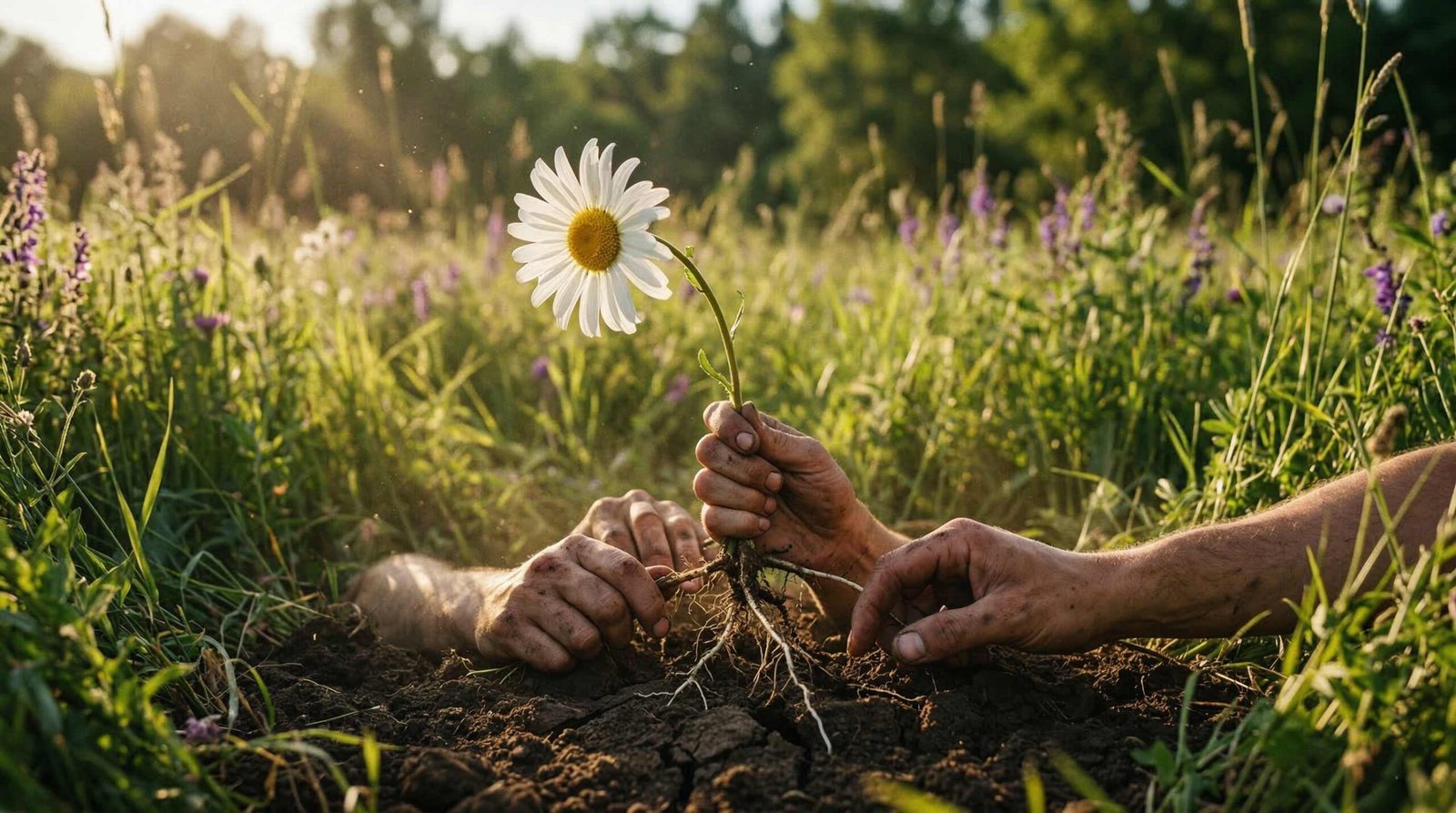
Now let’s zoom back in on Daisy.
Daisy is soft by nature. No thorns, no complicated defense mechanisms. As long as the soil she grows in is healthy, she thrives and blooms effortlessly.
But imagine if that environment slowly turns into waste. The water gets murky. The whole vibe becomes draining. Every entity that comes around just takes, takes, and takes, without ever giving anything back.
Over time, this doesn’t just make Daisy tired.
At a certain point, she starts slipping into emotional burnout, simply because she’s been absorbing energy that was never hers to carry in the first place.
So what is Daisy supposed to do, just sit there and wait to wither?
Of course not.
At some point, she has to adapt.
Maybe she starts closing her petals, protecting what’s left of her energy.
Or maybe she pulls herself out entirely and refuses to grow in that toxic soil anymore.
From the outside, this shift looks like a brand new red flag.
People start whispering, “Daisy’s changed.”
But here’s the plot twist: it was never Daisy who changed.
The soil was already rotten.
And emotional burnout was just the alarm, telling her that environment was never meant to sustain her in the first place.
Life Isn’t Just One Story
In psychology, there’s a powerful concept called Narrative Identity, introduced by psychologist Dan McAdams from Northwestern University. The idea is simple but hits deep: humans tend to process their lives like a Netflix series.
We often act as if life is just one episode, judging everything from a single moment, when in reality, it’s made of multiple chapters that keep evolving over time.
The core problem with empaths is this: they spend way too long handing over the “main character” role to people who were never meant to stay.
In reality, not everyone you meet deserves permanent screen time in your story.
Some people are only meant to exist in a single chapter.
Some show up purely for character development (read: they leave you with lessons that don’t always feel gentle).
And some are nothing more than a brief cameo before a new season of your life begins.
The Plot Twist in Daisy’s Story When Emotional Burnout Begins to Show Up

At a certain breaking point, Daisy finally hits a wake-up call.
She realizes she’s been playing an NPC in other people’s lives for way too long.
Too long believing the scam that being “the good one” means always being available, always being the one people step on just to keep things peaceful.
And then, something shifts.
Daisy starts rewriting her own script.
Slowly, she becomes more selective about who actually deserves access to her energy.
Her mental territory is guarded with more intention now, no longer left wide open for anyone to walk through.
And for the first time in a long while, the main character crown finds its way back to where it always belonged, on her own head.
Of course, this shift feels shocking to the people who’ve been used to feeding off her energy for free.
The boundaries Daisy builds suddenly become “the problem.”
From the outside, her energy now reads as cold, distant.
Some even start whispering that she’s changed.
But from Daisy’s side, this isn’t a tragedy.
It’s something much simpler:
character development finally kicking in after way too long being stuck in emotional burnout.
When Daisy Stops Growing in Toxic Soil

At the end of the day, this whole Reactive Narcissism saga isn’t a documentary about a saint suddenly switching sides and becoming narcissistic.
It’s the reality of someone who’s been giving away their sanity like charity for far too long, without ever being equipped with the tools to protect themselves.
Empaths often start out like Daisy, soft, open, and trusting in the best way possible.
But that same openness can make them easy to deceive, simply because they believe a little too much in people.
And then real life steps in with a curriculum no school ever teaches:
no matter how beautiful or gentle you are as a flower, you still need a sane environment and a healthy circle to actually grow.
And one more thing, if someday you hear people whispering, “Daisy’s so toxic now,” maybe pause before you buy into it.
Because the story is never that shallow.
Chances are, Daisy didn’t turn into poison.
She just leveled up, got a little wiser, and finally stopped wasting her bloom on soil that was toxic from the very beginning.
When Empathy Starts Losing Its Direction

Let’s be honest, sometimes the root cause of your mental breakdown isn’t because you’re “too nice.”
The real issue is that you’ve been stuck for too long in an environment that’s completely illiterate when it comes to valuing empathy.
That’s exactly why this reactive narcissism phase tends to surface more often than people think.
And just to be clear, this doesn’t mean you suddenly switched roles into some validation-hungry villain.
Quite the opposite.
This phase shows up because your soul has hit late-stage burnout after holding in too much negative energy, most of which wasn’t even yours to begin with.
Also check out: When Your Tears Turn Against You, Nothing Is a Coincidence — Dang, This Goes Deep
And when you’ve already hit that kind of lowest point, just learning to say “no” isn’t really enough anymore.
What actually matters now is something deeper, you need to reset and rebalance the energy at your core.
Think of it like a smartphone, your system is overloaded, cluttered, glitching.
What you need isn’t just a quick fix, you need to clear the cache so everything can run properly again.
So if lately you’ve been feeling way too drained from being everyone’s emotional dumping ground, maybe this is your cue to hit the brakes for a moment.
At the end of the day, this is your time to tune in and realign your inner self from within, before your nervous system actually short-circuits.
As a starting point, you can begin exploring and understanding how this energy recalibration process actually works, both logically and spiritually, right here:
👉 https://galungswa.com/id_id/chakra-alignment-soul-awakening/
Because at the end of the day, the first step to stop growing in toxic soil isn’t about fighting the whole world.
Sometimes, the ultimate power move is much simpler than that:
coming back into alignment and being in tune with yourself again. ✨













 Bahasa Indonesia
  English
  Français