

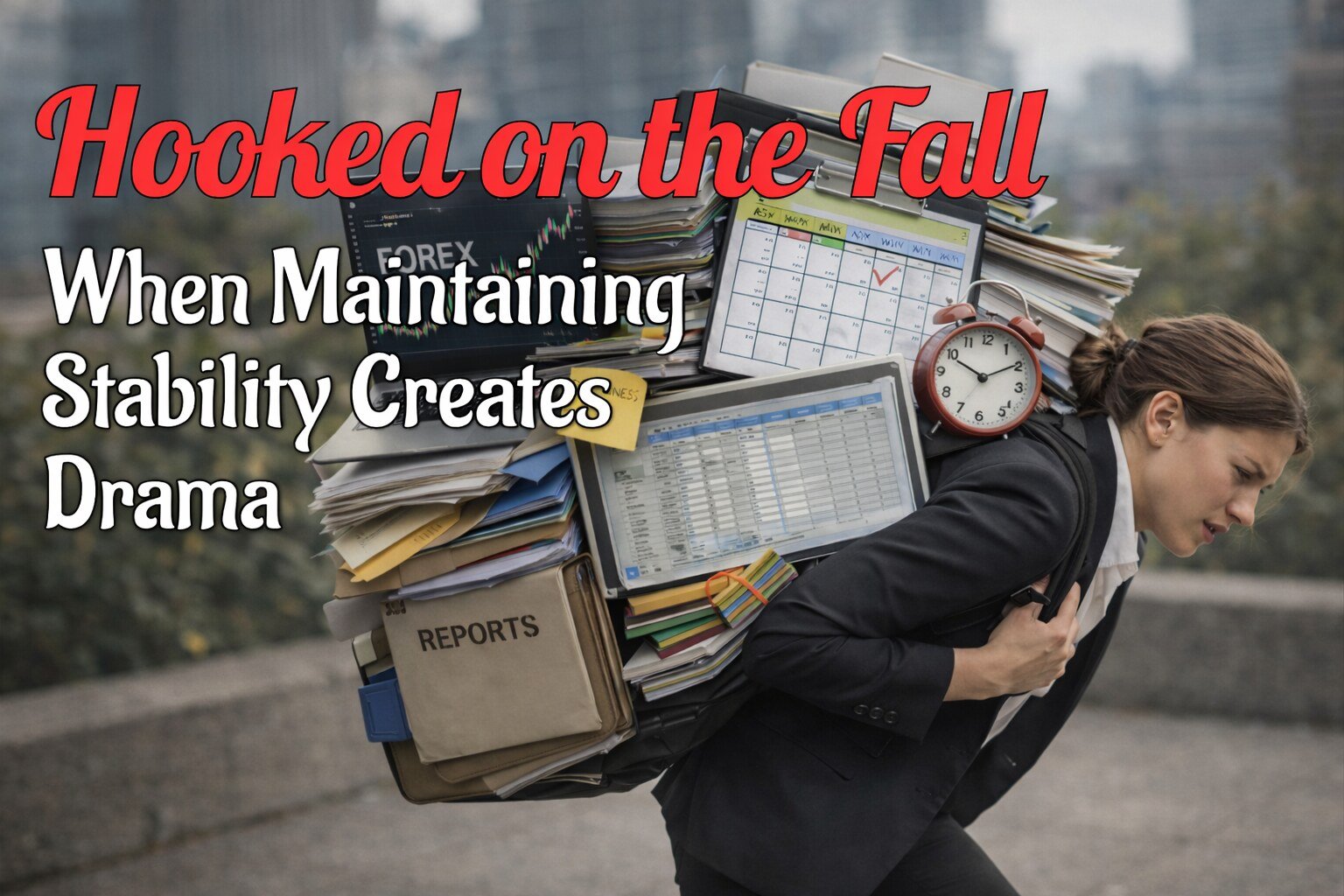
Hooked on the fall isn’t just a dramatic phrase people throw around for effect. It reflects a real phenomenon where the struggle begins not while climbing, but after you finally reach a stable point. You’ve leveled up. Your career is soaring, your income is stable, and life looks more organized than before. The goals you once chased relentlessly are now within reach. Yet strangely, what arrives isn’t peace. Instead, a new kind of pressure quietly takes over.
Maintaining stability in life can feel mentally more exhausting than when you were hustling your way up from the bottom. Not because you’re incompetent, but because your expectations and standards naturally rise with you. Every move starts to feel like it has to be calculated. No downgrades, no careless mistakes. That’s when anxiety begins creeping in quietly.
The Quiet Reality of Being at the Top

At this stage of trying to maintain stability, even the smallest mistake can feel like the beginning of a disaster. Spending money on something trivial suddenly triggers a wave of guilt, as if you’ve failed to manage yourself properly. One slightly wrong decision, and imposter syndrome shows up immediately: “Maybe I’m not actually meant to be at this level.”
Even when everything seems calm and safe, your mind keeps overthinking. There’s a strange distrust toward peace itself. Stability begins to feel suspicious, as if it’s only a temporary illusion and some hidden ticking bomb is about to explode at any moment.
And here’s the most honest plot twist: when everything actually falls apart, deep down there’s a strange sense of relief you try hard to deny. It’s almost as if falling hits a pause button. The anxiety of constantly trying to keep everything together finally stops. The impossible standards disappear. And for a moment, you’re freed from the pressure of having to stay perfect all the time.
At that level of mental exhaustion, hooked on the fall is no longer just a psychological theory. It turns into a toxic pattern. A kind of subconscious drive to engage in self-sabotage, tearing things down from the inside, just so the pressure of maintaining that position collapses along with it. Ironic, isn’t it…
Anti-Hero: Why We Feel More Comfortable with the Messy Ones

Pop culture today is no longer fascinated by perfectly flawless heroes. Instead, we’re drawn to characters who are flawed, complex, and a little dark, like Joker or Walter White from Breaking Bad. They aren’t symbols of moral perfection. They are symbols of conflict.
Why do characters like that feel more alive? Because the anti-hero carries no burden of being perfect or maintaining stability. They are free to make mistakes, free to be angry, free to fall apart. And precisely because of that, they feel deeply human.
Now bring this back to real life. Once you become successful, you’re unconsciously cast as the “hero” in your own story. You’re expected to be wise, disciplined, financially stable—someone who always appears put together. The pressure is subtle, but it never really stops.
Sometimes, messing things up or falling apart feels like a moment of returning to being simply human. There are no expectations and no image left to maintain. Psychologically, people tend to connect more easily with conflict than with perfection.
Perfection often creates silence, and not everyone feels comfortable in a quiet place like that. That’s why some people unconsciously create drama in their own lives. Not because they truly want to fall apart, but because they crave intensity just to feel alive again.
Read Also: Quantum Secrets: 7 Wild Ways to Make Your Dreams Come True, Successful 20s: Rarely Realized Ironies and Twists
Rock Bottom Spirituality: The Romanticization of Collapse
For centuries, religion and culture have often taught that collapse is the gateway to transformation. In mystical traditions, there is also the concept of the Dark Night of the Soul, introduced by the spiritual figure John of the Cross. The idea is simple: suffering is seen as a phase of purification before one reaches deeper clarity or enlightenment.
This narrative is beautiful. Powerful. And without realizing it, it becomes psychological fuel for many people who are Hooked on the Fall. Over time, we begin to believe that the lowest point is the beginning of awakening, and that every crisis is a kind of spiritual calling.
The problem starts when your mind begins associating the “meaning of life” only with moments of crisis. Then when life finally becomes stable and calm, you find yourself busy just maintaining that stability. Suddenly everything feels a bit empty, less deep, spirituality feels thinner, and life doesn’t seem as dramatic anymore.
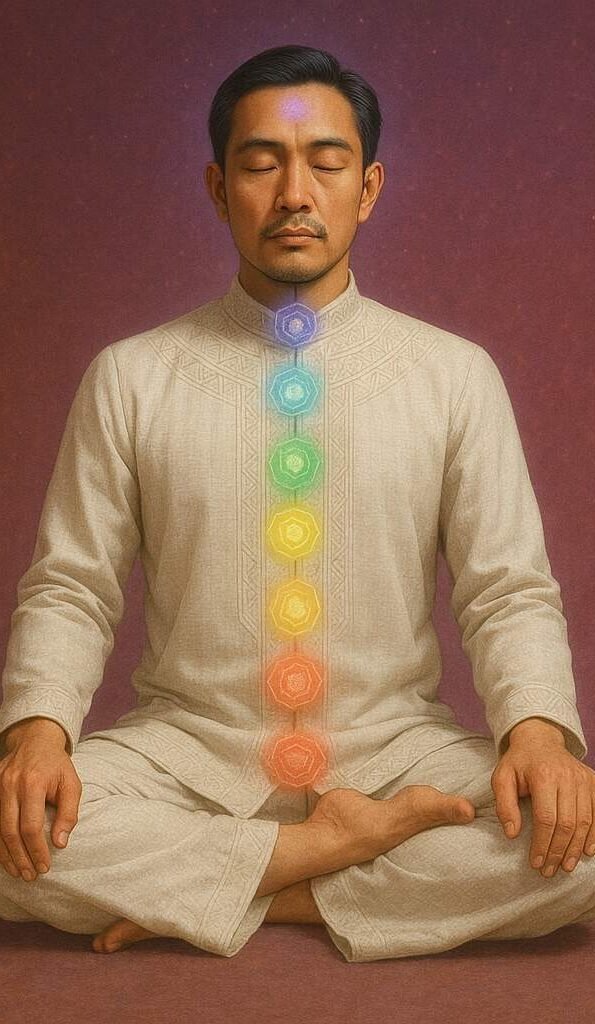
In the end, some people end up creating another downfall almost like a “ritual,” just to feel that they are moving through a process again. Rock bottom is no longer a misfortune, but a kind of addiction. The truth is, real maturity is often quiet and even a little boring. It isn’t dramatic and it doesn’t need an epic narrative. It only requires consistency—and unfortunately, consistency rarely gets a standing ovation.
Modern Masochism: The Addiction to Falling and the Struggle to Maintain Stability

Sigmund Freud once explored the concept of moral masochism, the inner drive to seek suffering as a form of self-justification. In the modern era, this often shows up as self-sabotage, where someone who has already achieved success can start feeling insecure about their own position.
As living standards rise, identity standards rise as well. The gap between “who I am now” and “who I think I should be” begins to feel like a threat.
On top of that, there’s the theory of Loss Aversion from Daniel Kahneman, which explains that the pain of losing something is psychologically much stronger than the pleasure of gaining it. The higher your position becomes, the stronger the anxiety of losing it.
Maintaining stability can feel like sitting on a ticking time bomb. You never know when it might explode, but every second carries tension. That’s where the paradox appears: sometimes falling first feels more relieving than living under the constant fear of falling. Once everything collapses, it’s over. There’s no image left to protect, and no more fear of losing what you have.
This is about your nervous system. If you grew up in an environment dominated by survival mode or constant hustle, maintaining stability can feel unfamiliar. And to our mammalian brain, what feels unfamiliar often registers as danger.
Hooked on the Fall: Different Faces in Men and Women

The phenomenon of hooked on the fall doesn’t actually belong to any single gender. The pattern is the same, but the pressure often appears in different ways for men and women.
For many women between the ages of 25 and 30, the pressure often comes from internal competence. There’s a strong drive to prove that they can stand on their own. “I need to manage my finances well,” “I have to look capable,” or “I can’t appear vulnerable.”
When life begins to stabilize, new standards tend to appear. Stability is no longer just a sense of security, but a responsibility to keep appearing strong. Small mistakes can start to feel like proof that you’re not fully worthy of being at that level. As a result, maintaining stability begins to feel like an identity test that never really ends.
For many men at the same age, the pressure often appears in the form of performance and ego. It’s not only about financial stability, but also about momentum. “I can’t afford to stagnate.” “I have to keep showing progress.” Within this pattern, stability can sometimes feel suspicious. Without new challenges or conflicts, some men begin to feel they are losing the drive to prove themselves
The surface may look different, but the roots are the same. Both men and women are trying to protect an identity that has risen alongside their success. When that identity isn’t fully ready yet, hooked on the fall can appear as a subtle restlessness that slowly erodes the stability that was built with so much effort.
Learning to Maintain Stability at the Top
Your main challenge right now isn’t about how to climb higher, but how to stay calm. First, stay where you are without guilt-tripping yourself. Second, stay cool without looking for cheap drama. Third, maintain emotional stability without feeling the need to prove something to the world every single day.
Healthy growth is rarely dramatic. It’s steady, slow, but certain. If you feel restless when your life is actually peaceful, it doesn’t mean you’re weak. It simply means your nervous system hasn’t fully adjusted to feeling safe yet.
Safety isn’t boring. It just doesn’t carry the same adrenaline as constant struggle. Maturity is no longer about how epic your comeback is after a fall. It’s about how calmly you can enjoy stability without destroying what you’ve already built. You deserve success, and accepting that truth is sometimes harder than starting from zero.
How to Break Free from Hooked on the Fall

The real challenge after someone levels up is no longer about how to win, but about how to stay calm once life reaches a stable point. Many people are used to fighting their way up, but they never truly learn how to remain at the top. When the position is finally achieved, a new kind of pressure appears. It often comes in the form of fear of losing what has been gained, anxiety about making mistakes, and the constant urge to keep proving oneself.
In reality, breaking free from the hooked on the fall pattern often doesn’t require a massive life change. What it really asks for is a simple skill that few people are ever taught: the ability to stay where you are without constantly blaming yourself, to remain calm without creating new drama, and to maintain emotional stability without feeling the need to prove something to the world every single day.
Healthy growth rarely looks dramatic. It moves slowly, steadily, and consistently. If one day life feels too calm and that calmness makes you uneasy, it doesn’t mean you are weak. More often, it’s simply a sign that your nervous system isn’t yet used to living in a state of safety. Stability may not bring the same adrenaline as struggling from the bottom, but it is often where real maturity begins to take shape.
In the end, maturity is no longer about how epic someone’s comeback is after a fall. True maturity is the ability to enjoy stability without destroying what has already been built. Because accepting that you deserve to remain successful is often much harder than fighting your way up from zero.
FAQ: Why Does Overthinking Appear When You’re Trying to Maintain Stability?
Overthinking often appears precisely when you are in the phase of maintaining stability, holding your level, and trying to stay consistent in the position you worked so hard to reach. Ironically, the harder you try to protect that stability, the more sensitive your mind becomes to small potential “threats.”
1. Is it a sign of weakness if I feel afraid when life is finally stable?
No. It’s simply a sign that your nervous system hasn’t fully adjusted to feeling safe yet. If you’ve spent a long time living in survival mode or caught in hustle culture, calmness can feel strangely unfamiliar. When you’re maintaining stability and suddenly there’s no drama, your mammalian brain gets confused. It’s used to constantly scanning for danger. So when everything is actually safe, it starts searching for potential problems. You’re not weak. You’re just not used to living without chaos.
2. What’s the difference between healthy ambition and self-sabotage?
Healthy ambition helps you level up without destroying the foundation you’ve already built. It’s growth that maintains stability rather than tearing everything down just for the thrill. Self-sabotage is different. It’s when you create chaos even though the situation is actually safe. A simple rule of thumb: if a decision comes from clarity, it’s ambition. But if it’s driven by anxiety and fear of losing your position, it’s likely a subconscious pattern of self-sabotage.
3. Why does it feel strange that when everything falls apart, I secretly feel relieved?
Because when everything collapses, it can feel like pressing an automatic pause button on the pressure you’ve been carrying for so long. There’s no longer the burden of maintaining performance or protecting an image. Psychologically, that sense of relief is a release from the chronic tension of constantly trying to preserve stability and fearing a fall. Sometimes collapse feels lighter than living in the anxiety of waiting for it to happen.
### 4. Ini sama kayak imposter syndrome nggak sih?
They’re similar, but they move in different directions. Imposter syndrome is the feeling that “I’m a fraud and I don’t belong here.” Hooked on the Fall is more extreme. It’s not just feeling unworthy, but feeling a subconscious urge to tear down your own position so you no longer have to carry the pressure of maintaining those standards.
5. Does everyone who becomes successful go through this?
Not everyone experiences it. But many do, especially around ages 25–30, when identity is going through a major upgrade. The more drastic your life shift is, the heavier the pressure becomes to maintain stability so it doesn’t look like you’re dropping a level. This isn’t about being mentally weak. It’s about your nervous system adapting to a new version of yourself.
6. How do you stop being addicted to “falling”?
First, become aware of the pattern. Learn to distinguish between a real problem and an anxiety projection. Second, train your nervous system to feel comfortable in stable conditions without searching for drama. Third, and this is the most brutal one: accept the fact that you deserve success, without needing to break something first just to feel alive.
Also check out: No Wonder Your Affirmations Keep Failing, Still Chasing Wealth? That’s the Poverty Talking
For Those Who Felt Personally Called Out by This Article…

If, while reading this, you caught yourself thinking, “Damn… this hits a little too close,” then the root cause probably isn’t a lack of financial strategy or productivity. It’s more likely a subconscious mental pattern that’s hooked on the fall.
At Galungswa.com, I’m not here to push you to hustle harder. The work is about uncovering the blind spots in your mind that keep pushing you to sabotage your own stability. Because honestly, sometimes what needs healing isn’t a “scarcity mindset.” It’s the fear of living a calm and stable life
You don’t need to fall apart again just to have a dramatic comeback story. What you really need is to learn how to stay where you are without feeling guilty about it. And if you’re tired of this toxic pattern and genuinely want to align with a more stable and grounded version of yourself, you already know where to land.
Galungswa.com isn’t a place that feeds your drama. It’s a space where you can stop running from the stability you worked so hard to build.
\














 Bahasa Indonesia
  English
  Français